





Visual perception and cognition
Visual and nonvisual effects of light
Architecture and environmental psychology
Daylight and building physics
Energy efficiency and sustainability
Light influences how we see, feel, act, and experience spaces. Its effect does not arise in isolation, but rather through the interplay of perception, space, technology, and context of use. For this reason, we do not view light from individual disciplinary perspectives, but rather analyze its effects and influencing factors in their mutual relationships.
As an interdisciplinary research group, we combine perception science, psychology, architecture, building physics, and engineering to gain a holistic understanding of the effects of light and create a sound basis for decision-making. With the aim of promoting a holistic understanding of light, we do not use experimental laboratory studies, field investigations, simulations, and data-driven analyses in isolation, but rather bring together the insights gained from them in a contextual manner—from physical fundamentals to physiological and cognitive processing to systemic integration into built environments.
Our research is based on fundamental science and at the same time practical, creating knowledge that flows directly into planning, development, and design.We conduct research for the further development of the industry, for the improvement of lighting solutions and products, and for a deeper understanding of their effects. In doing so, we represent an open, transparent, and academically responsible research culture. Results obtained internally or in collaboration with science, practice, and industry are published freely and made available to the professional community on a long-term basis.
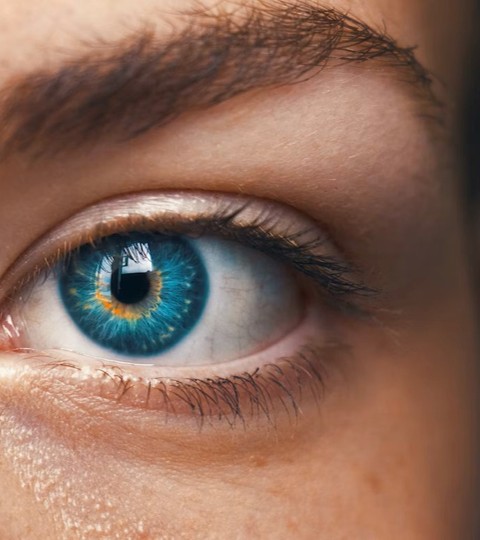
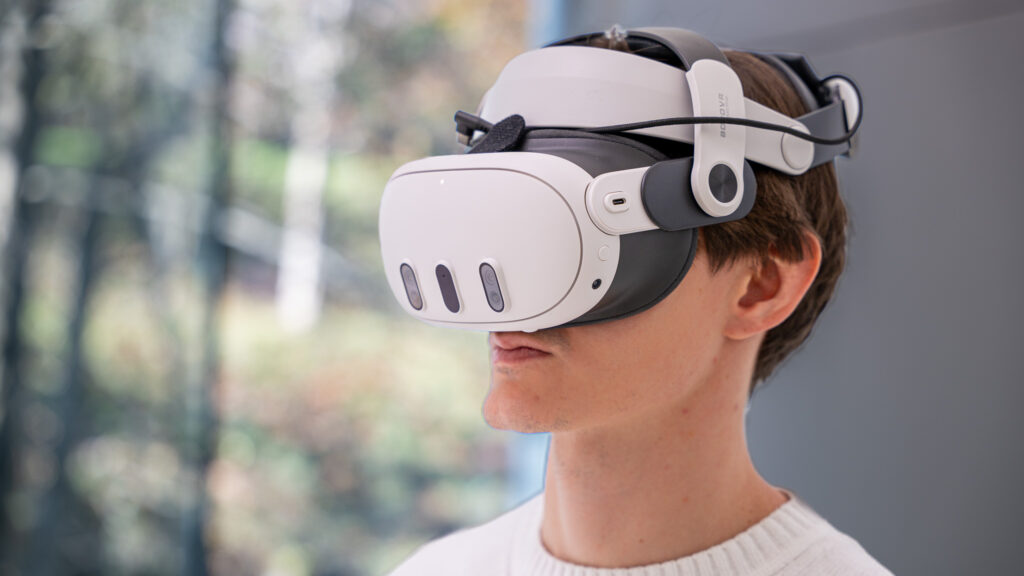
We investigate how people perceive, process, and evaluate visual information—from materials and objects to entire rooms. These processes determine how environments are understood, classified, and experienced aesthetically. The focus is on processes such as object and material perception, spatial orientation, and aesthetic evaluation. Based on controlled experiments, psychophysical methods, eye tracking, EEG, and virtual environments, we analyze how visual stimuli lead to stable impressions, attributions of meaning, and evaluation processes. The goal is to understand the cognitive mechanisms behind perception and evaluation—as a basis for evidence-based design of light, materials, and spaces.
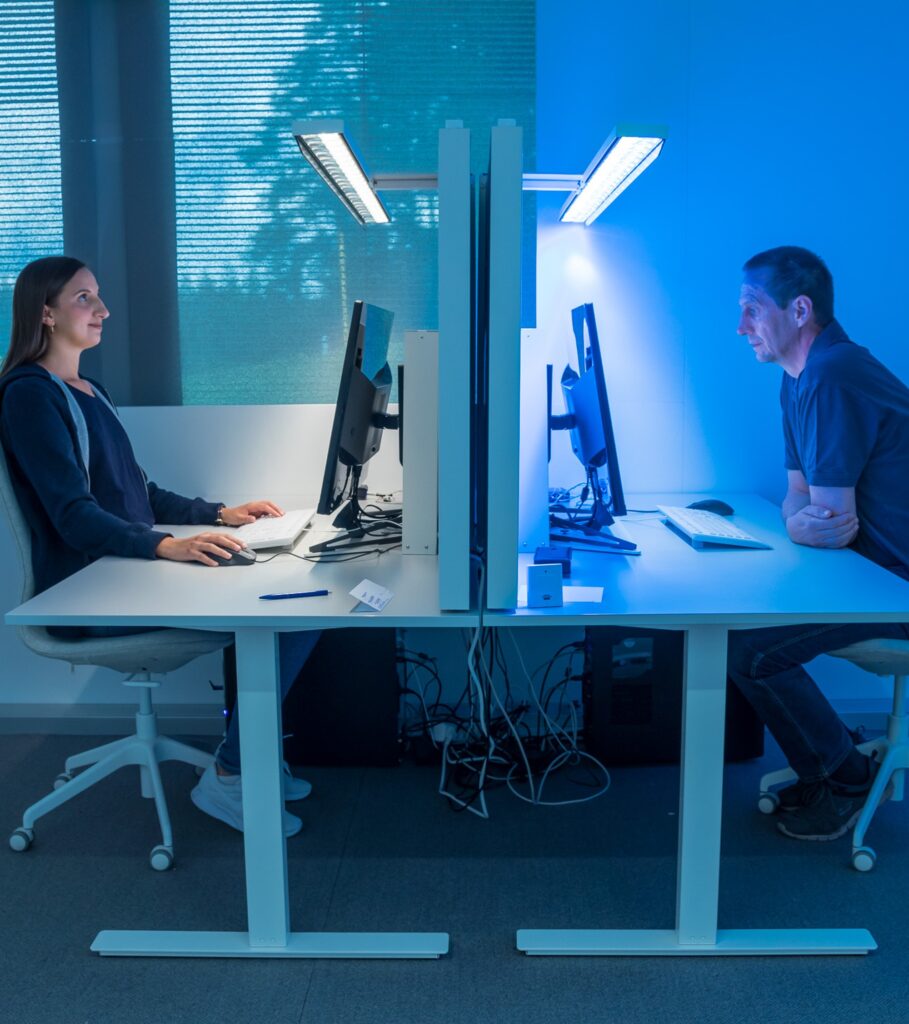
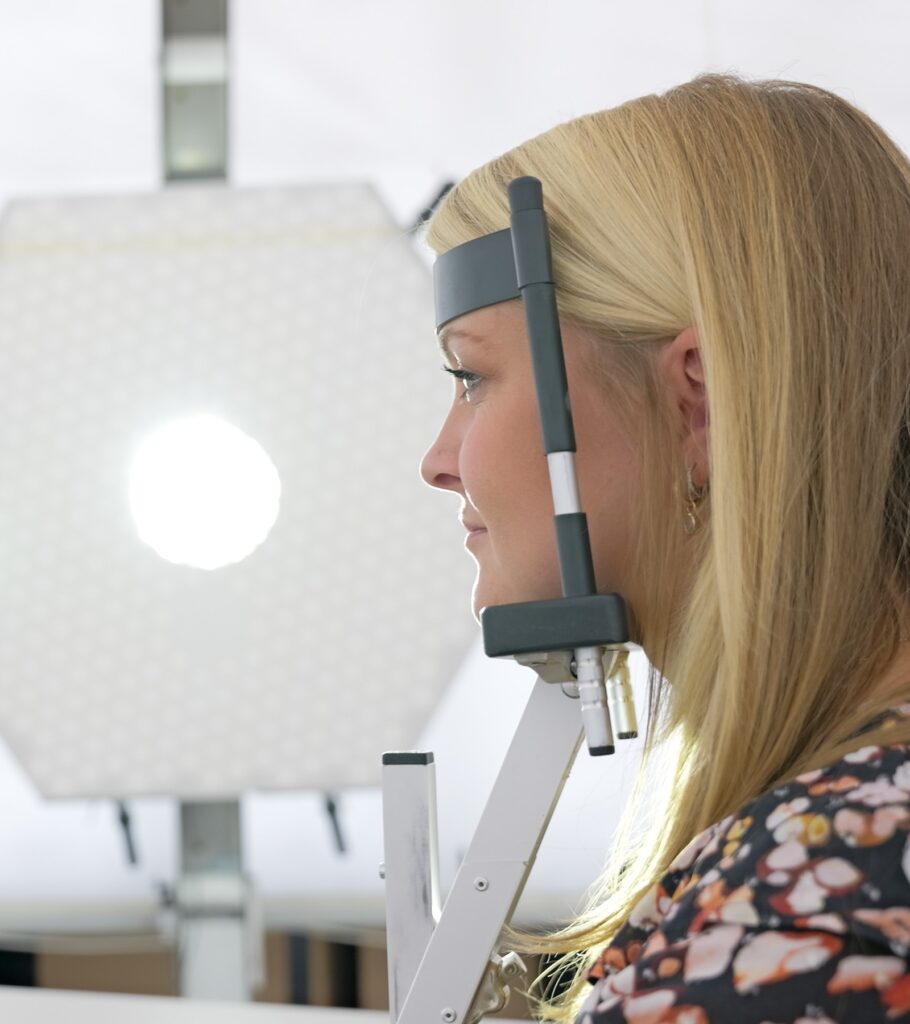
This research area investigates how light affects humans, both visually and beyond pure vision, for example in terms of attention, performance, and biological rhythms. Both visual effects on visual comfort and performance and non-visual effects on circadian rhythms, attention, and physiological regulation are analyzed. Laboratory and field studies examine spectral compositions, temporal dynamics, and light intensities under controlled conditions. The combination of physiological measurements, behavioral data, and subjective assessments enables an integrative understanding of biological light effects, which serves as the basis for evidence-based lighting concepts.
We explore how architecture and built environments influence experience, behavior, and well-being, and what role light plays in this. The focus is on how spatial structures, lighting, and atmospheric qualities are perceived, interpreted, and evaluated, and how they shape social and behavioral processes. Environmental psychology theories are linked with experimental designs, VR simulations, and field studies in real spaces. The goal is to understand key mechanisms of human-environment interaction and to derive ideas for human-centered design of architecture and urban spaces.
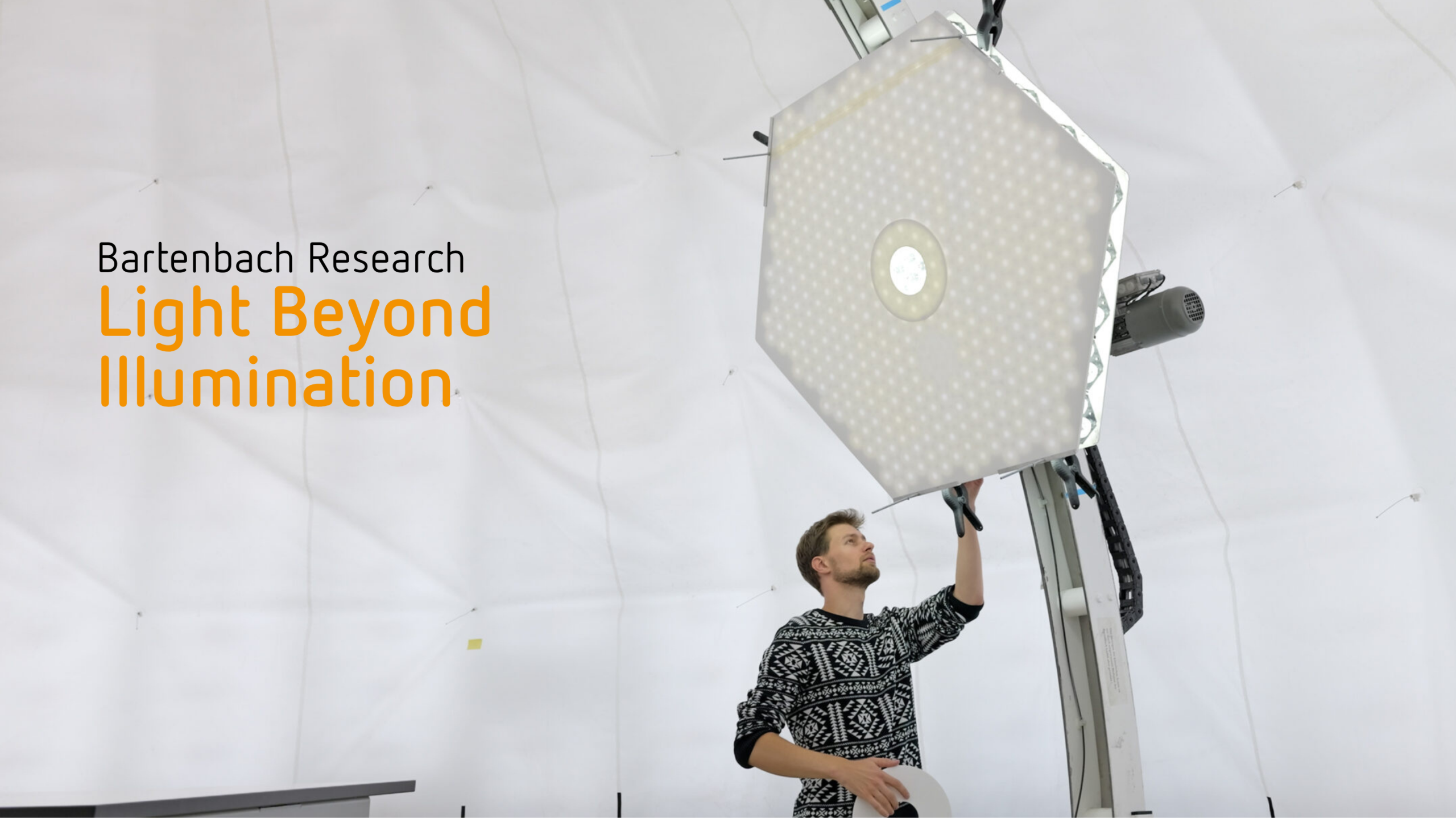
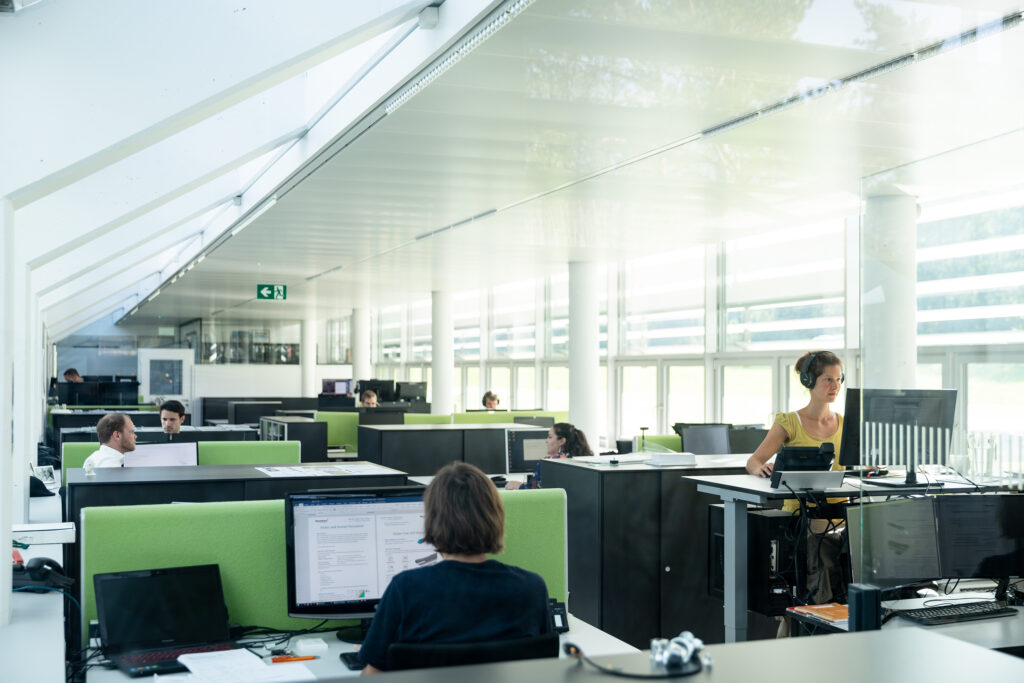
In this area of research, we investigate how daylight influences visual quality, room comfort, and energy consumption, and how these factors can be optimally coordinated. We analyze both the physical principles of light propagation in buildings and its perceptual and energetic effects. Simulations, measurement campaigns in the G-value measurement facility, and experimental studies are used to investigate interactions between facade design, materiality, and interior lighting. The aim is to understand building physics processes in such a way that daylight strategies can be implemented not only in accordance with standards but also to a high quality.
We are researching how energy-efficient and resource-saving lighting solutions can be developed without compromising visual quality or lighting effects. Concepts are examined taking into account visual quality, biological effects, and ecological impacts. Simulation-based modeling, experimental evaluations in our in-house Living Lab, and data-driven analyses are used to identify the potential of adaptive and environmentally friendly systems. The aim is to promote sustainable lighting strategies that balance technical feasibility, social responsibility, and evidence-based design.
Unsere Website benutzt Cookies, die für den technischen Betrieb der Website erforderlich sind und stets gesetzt werden. Mit Statistik-Cookies werden die Zugriffe auf die Website anonymisiert festgehalten. Diese helfen uns, die Website zu verbessern.